
How to decide on product pricing
...and what is the connection with stakeholder value?
Here I am going to share with you a simple example of how to price a new product entering a market (in the categories of FMCG products, OTC or Medical Device, where your customer is any type of retailer; the text can be used to some extent for certain services and other products). This example below I would not use for an existing brand product extension or product replacement, as these situation would have a slightly different path of entry and process. This text is not going to refer to your gross margin analysis or to pricing for profit scenario’s, which would be a necessity as well.
1st ask yourself 2 questions: 1) Where do we “play”? 2) How do we “play”?
(Of course, you can ask yourself a question “why” do you launch a product at the first place, to double check rational before you go down this road, but I assume that you have done your homework in this part, when you came to product pricing decisions)
Where do we play?
What is your product providing as a benefit to a consumer? Benefits can be functional and emotional. Functional in terms of “your product is providing X service/ benefit” and emotional in terms “I can relate to this product, I am doing something good for myself using these products, I am being smart, I am being a good mom/dad…”. Couple of examples: imagine you are launching a sore throat treatment product. You would need to understand how is this condition occurring, what is causing this particular one, and what are possible treatments, how are these treatments undergone, or you may imagine you are launching a new protein bar – how do the protein help your body, quantities and usage, consumption habits, occasions, and more... Understanding these, you would understand the products you compete with (direct/obvious competitors and substitutes – product of different category providing similar benefit), or what is the category you are “playing”, or is this maybe a new category? – but ultimately you would get a list of direct and indirect competitors (substitutes).
Data gathering – what is the information we want to analyze therefore collect? How do your competitors approach consumers and then analyze such information in relation to - how You plan to approach consumers?
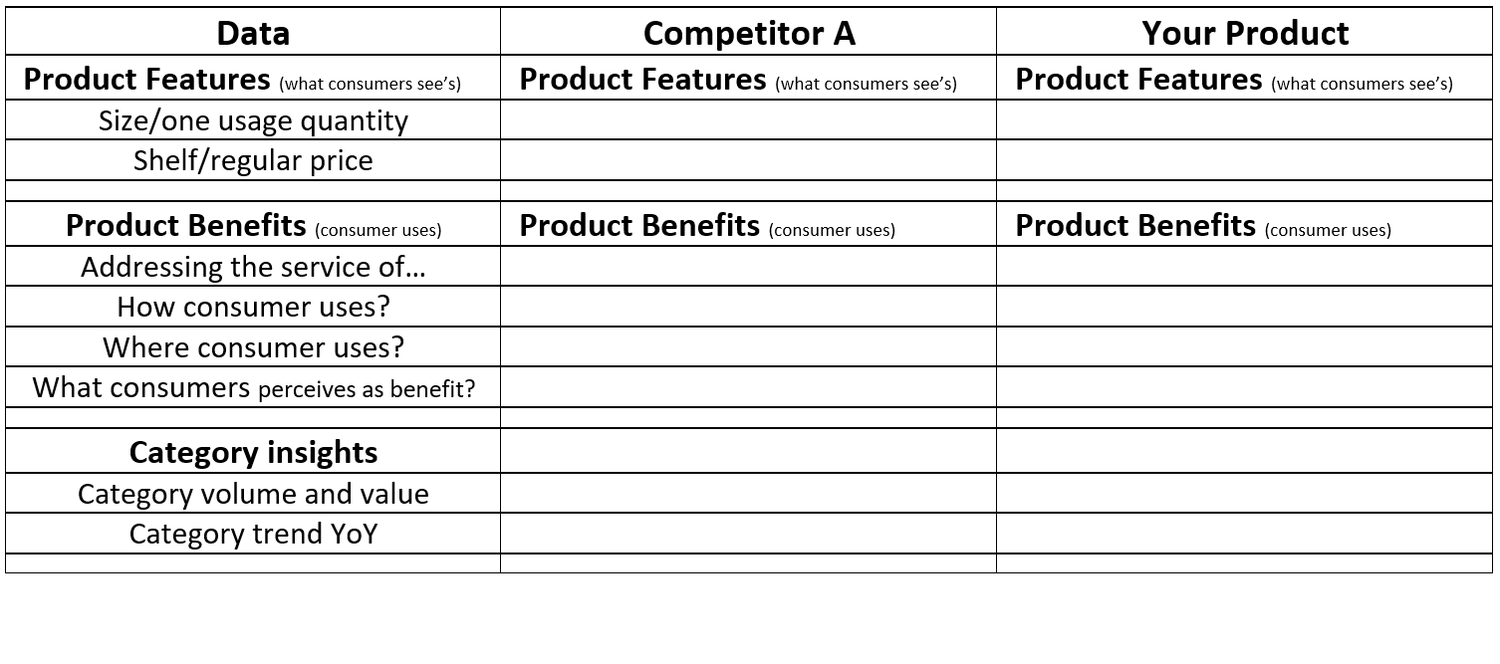
Marketing department/professional(s) (someone understanding the product design, ingredients, benefits…) should benchmark your product vs key competitors in key areas where you gathered data, getting consumers' feedback as to how your offer/product stands within the category on specific points – this will help you determine > regular shelf price you target vs category and key competitors. For example, if your sore throat treatment products deliver perceived benefit 5x faster vs category and main competitors within the category, this could lead to a conclusion that you could position the product in the top part of the pricing range of the category in the launch phase, or when you achieve targeted market share. The same works for the protein bar as well, just the perceived benefits can be different, as they are, for most of the products.
How do we play?
After the initial work we have only one deliverable which is the regular shelf price of your new product. What else we need to know? I would start from understanding who are the stakeholders. My experience from a huge number of launches I have undergone that delivering value for each stakeholder is essential for product success. Stakeholders are: consumers, purchase decision influencers, customers & distributors (depending on your route to market process), your internal organization, partners/suppliers and shareholders. In part below we will explain important elements for consumers and customers.
For consumers on top of actual product benefits, regular price, promotional price is very important, as consumers tend to purchase more and more during promotional periods. Your decision on promo price position can vary depending on a number of elements, but it mostly comes down to who is the competitor, category you want to source your turnover from, and how big is the “out of pocket” size (single product purchase cost) compared to benefit of product.
Here is a little template that could help during this process.
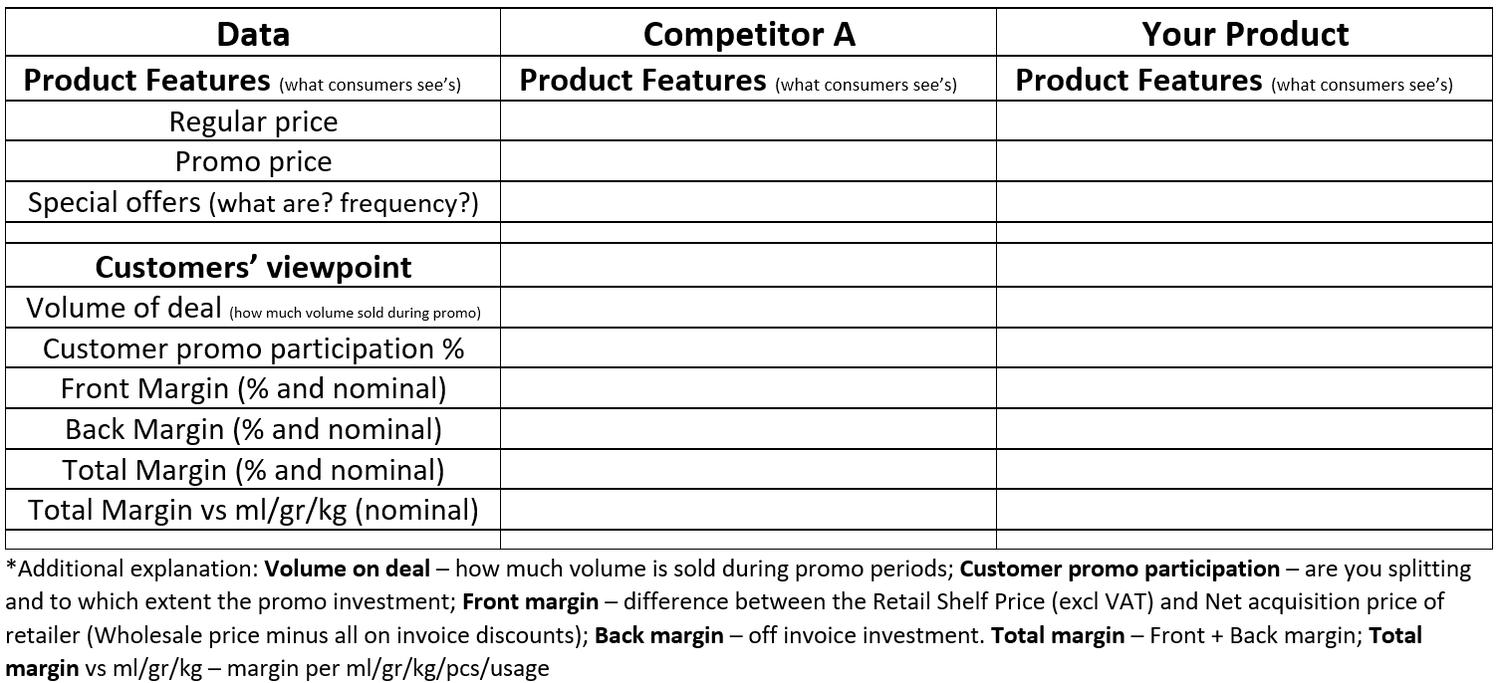
Template above will help you determine what is the current total profitability of your key competitors within the categories, and how you should position your wholesale price (thus estimated front margin)*every pricing decision of course sole discretion of retailer… and back margin conditions. Many companies fail to perform this step in the process, finding themselves their customers not accepting or sandbagging their proposals, not understanding that their proposal is actually deteriorating customer’s profitability. Watch out here if your proposal would be OK in terms of % (percentage points), but it’s not working in absolute terms. One of key words to keep customer/retailers happy is “profitable category growth”. So, don’t be surprised when you launch an economy positioned product, that retailers ask you to give them 10pp more than the current “players” within the category. I am not elaborating more on on and off conditions as this is a more of route to market and commercial condition story.
In the end, if you choose to pick out one sentence from the article - I propose it to be “new product launch should deliver value for all stakeholders”. Know your stakeholders, their interests, and make sure your proposal is based on partnership and understanding, and for sure your launch success rate will be higher.